
watershed planning
October 16, 2015
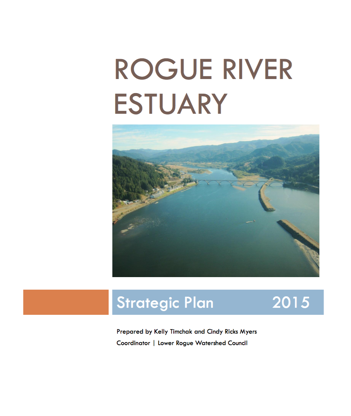
A strategic plan to guide restoration, enhancement, and conservation efforts in the estuary and its tributaries; emphasizing wetlands, floodplain connectivity, off-channel habitat, and water quality. Download this resource
July 15, 2015
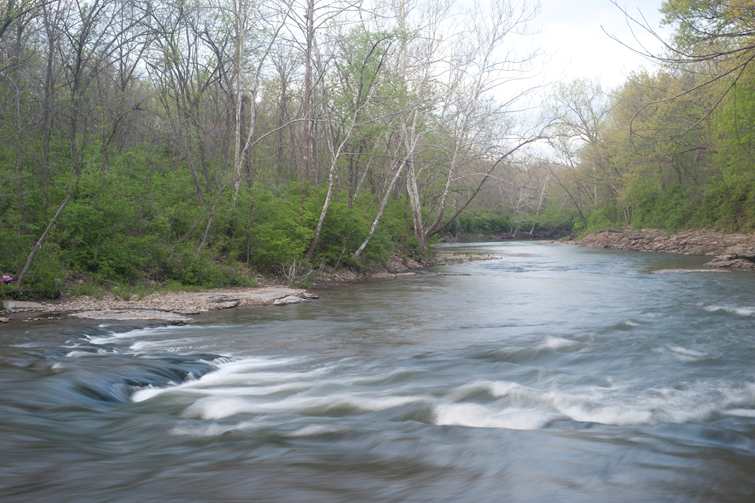
Heartland Conservation Alliance (HCA) was created as an alliance of diverse partners who share a vision and work collectively to conserve natural areas, connect people to nature and convene partners. Their mission is creating multiple benefits for people by focusing on projects that save Kansas City’s valuable natural resources and give them back to benefit the community—“ecological democracy.”
April 30, 2015
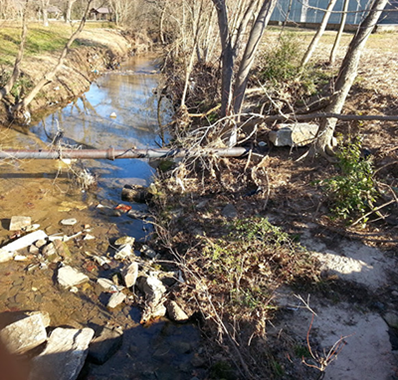
While ECO-Action serves as the lead for the project there are many partners working together to address stormwater and combined sewer overflow impact on Proctor Creek. Green infrastructure concepts and principals are being infused into the Clark Atlanta University dual engineering courses. This marks a milestone in the efforts led by ECO-Action to increase awareness among faculty, staff, and students about the importance of green infrastructure and the type of positive impacts these practices and principals can have at a local level.

April 7, 2015
In 2012 the Pollution Prevention Institute at Kansas State University was awarded a $60,000 urban waters small grant from EPA, part of which was used to conduct water quality monitoring in the river channel in addition to engaging the public in the removal of invasive species along the river bank. Intended outcomes of their project include establishing an understanding of the pollutants present in the river and helping create a more informed public which understands the importance and process of maintaining the integrity of the river channel.

March 26, 2015
In 2012 Groundwork Denver received funding from the Colorado Department of Public Health and Environment through the Environmental Protection Agency’s (EPA) 319 Nonpoint Source funds. With EPA’s funding Groundwork Denver has successfully created a non-point source watershed plan for the Lower Bear Creek.

October 10, 2014
Plaster Creek is a 14 mile-long stream that drains a watershed covering approximately 58 square miles, in metropolitan Grand Rapids, Michigan. The creek initially flows through agricultural lands, then commercial and residential areas, and finally an industrial zone and low-income neighborhoods before emptying into the Grand River.

July 10, 2014
The City of Newark was built along the banks of the Passaic River. In 1983, the Ironbound neighborhood was one of the first in the nation to be designated as a “superfund site” for dioxin along the Passaic River.
July 10, 2014
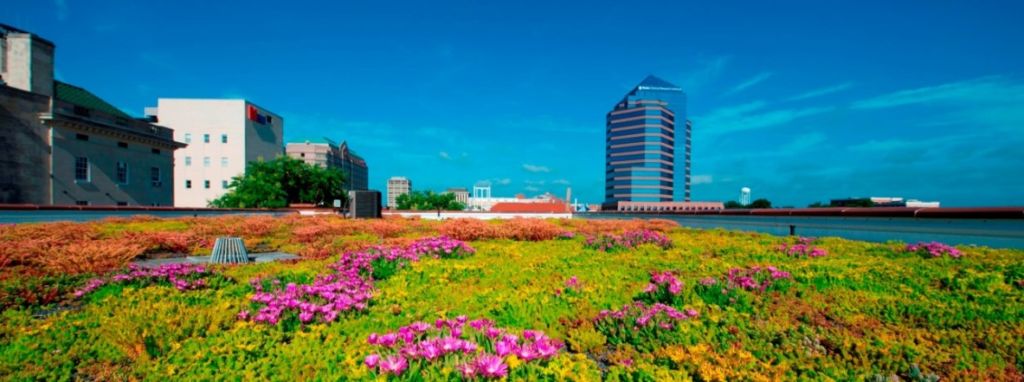
Ellerbe Creek flows out of the heart of Durham, North Carolina through the community on its 14 mile path to Falls Lake Reservoir, a drinking water source for more than half a million people. It offers a refuge for people and nature from the stresses of city life across its compact 37 square mile watershed. The entire creek has been designated as impaired since 1998 for ecological/biological integrity. Falls Lake Reservoir has similarly been identified as an impaired water body due to excessive levels of nitrates and phosphates associated with poorly managed stormwater and failing waste water systems.

April 1, 2014
The Urban Waters Federal Partnership, started in 2011, has provided a formal, coordinated effort to restore the river. Cities along the entire length of the river have seen the benefits of partnership projects with improved green space and water quality.