
urban forestry
July 30, 2024
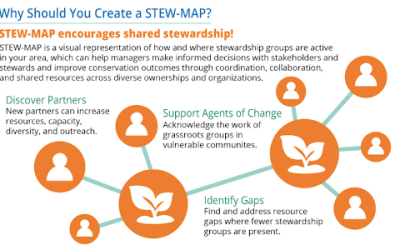
This resource combines three guides from the US Forest Service Stewardship Mapping Project (STEW-MAP): STEW-MAP Implementation Guide 2.0: A step-by-step guide for how to get STEW-MAP started in your city. […]

June 8, 2020
The Middle Rio Grande faces unique urban challenges due to regional drought and competing water uses. To address these issues, the area was designated as an Urban Waters Federal Partnership location in 2013. From large redevelopment projects to smaller, unique projects—like the Mobile Pop-Up Park —the Partnership has worked together with the community to become a partnership of ‘yes’. As Mandy Griego, former Partnership co-lead, puts it: “We are stronger together.”
December 4, 2019
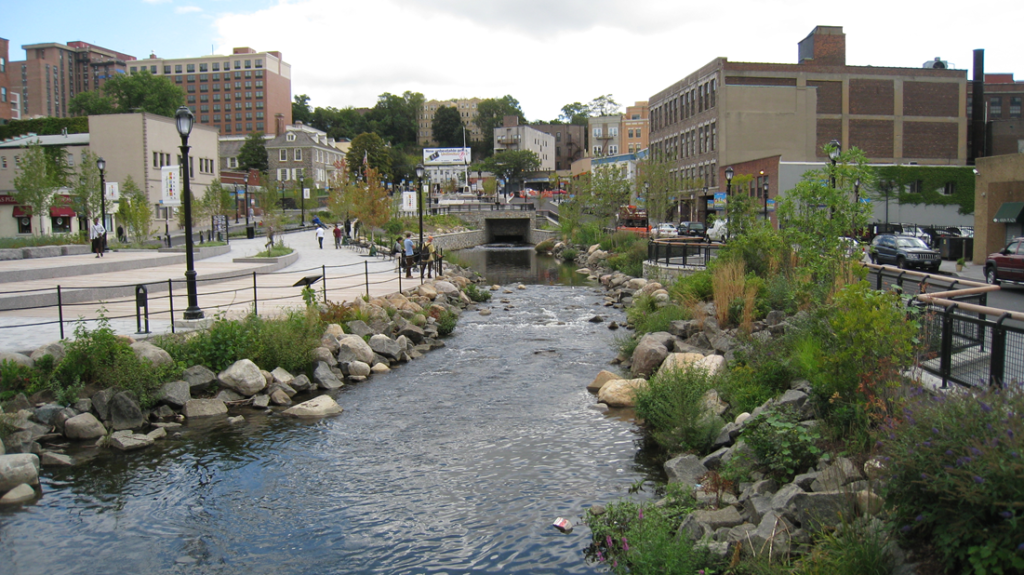
Project Highlights of the Urban Waters Learning Network Read about how three Urban Waters Learning Network organizations–Groundwork Hudson Valley, The Conservation Fund, and Groundwork Richmond–are working to create more green […]
February 14, 2019
When Hurricane Maria struck in September 2017, septic and power systems in the San Juan Bay Estuary failed and crucial habitats were destroyed as had been predicted by the vulnerability assessment conducted four years earlier. Although Estuario was prepared to respond, guided by the adaptation plans established in 2015, aging infrastructure, continued development in the watershed, and intense hurricane forces multiplied the impacts of flooding and water pollution. In the aftermath of the storm, it was very clear to Estuario leaders that aggressive actions needed to be taken to increase both the ecological and economic resiliency of the watershed. Estuario doubled-down on its efforts with #EstuarioRevive, an initiative designed to implement projects to monitor, restore, and increase the resilience efforts of the San Juan Bay Estuary.
November 29, 2018
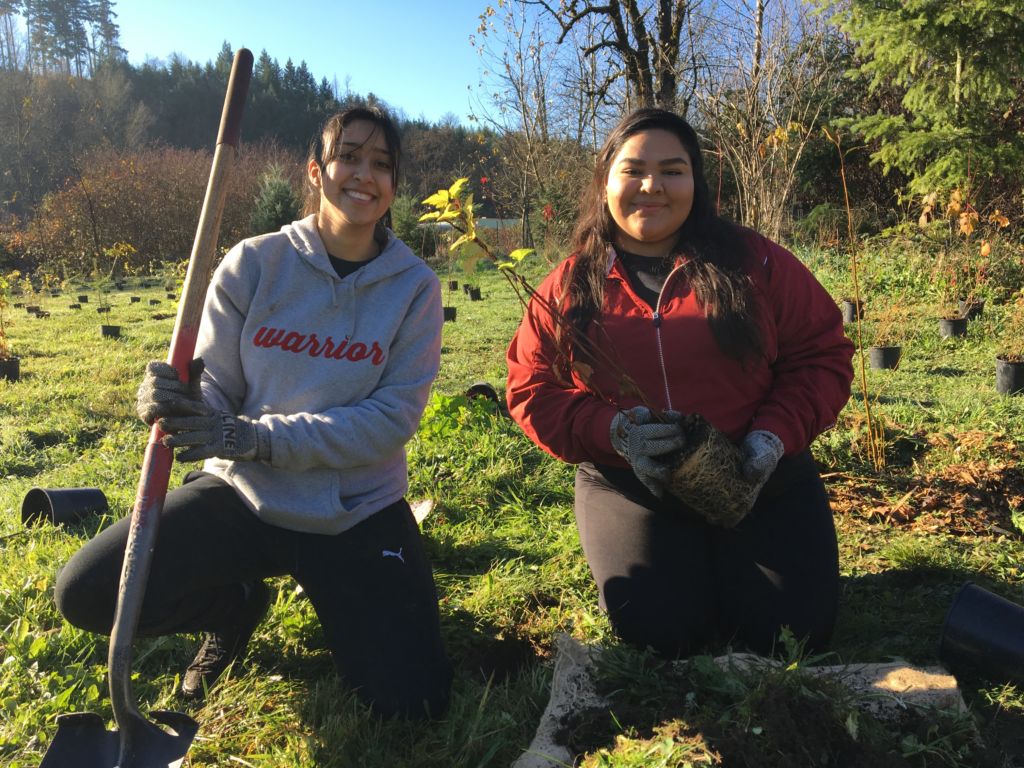
Partnerships and strong communication between government agencies and non-government organizations are key elements to overcoming the barriers to revegetation efforts of the urban sections of the Green-Duwamish River. The Green the Green Network (GGN) was developed over the last year under leadership of the Urban Waters Federal Ambassador, the King County Lower Green River Basin Steward and representatives from Forterra and American Rivers. With the intention of formalizing a partnership with clear goals and direction, leaders created the GGN to implement coordinated revegetation efforts in the watershed.
March 8, 2018
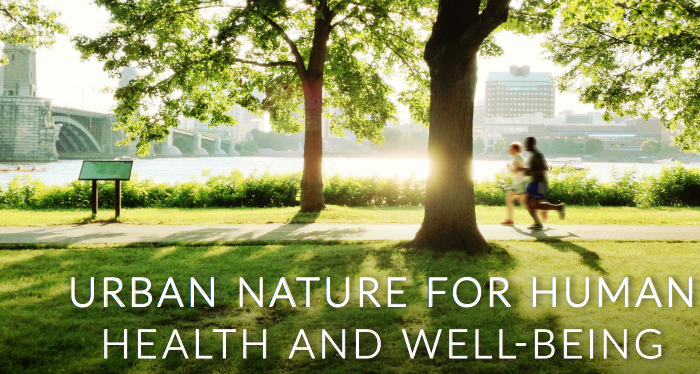
This report provides the latest research on the social, health, and economic benefits of urban green space, with an emphasis on tree canopies. Research shows that more trees and green space in urban areas directly reduce pollution, reduce heat, encourage exercise and related health, lower stress, and improve longevity among residents.

January 9, 2018
RiverXchange—a school-based program that supports and supplements Common Core and 21st Century Standards—is designed to introduce water resources concepts to young people using a variety of fun methods that integrate writing, math, science, and physical activity. By interacting with models, reading relevant texts, learning from experts, and going on field trips, students learn about watersheds, river ecosystems, and the importance of water conservation. They also learn how to monitor water quality and calculate their own ecological footprints, then internalize these concepts by writing about them in their own words.

June 9, 2017
This study was produced by Jobs for the Future (JFF) as part of NatureWORKS, a national initiative to understand the jobs, careers, skills, credentials, and potential of the U.S. green […]

June 23, 2016
The Duwamish is Seattle’s only river. It is a 5.5 mile long Superfund site that flows through Seattle’s Duwamish Valley – a highly developed urban and industrial center south of downtown. In 2014, the Duwamish River Cleanup Coalition Technical Advisory Group (DRCC/TAG) founded the Duwamish Valley Youth Corps (DVYC) with support from the Forest Service’s Urban Waters Federal Partnership. The DVYC supports environmental improvement projects identified by residents in the Duwamish River Valley. With a focus on urban forestry, river restoration, and green infrastructure, the program is equal parts environmental science, job skills training, stewardship, and hands-on restoration.