
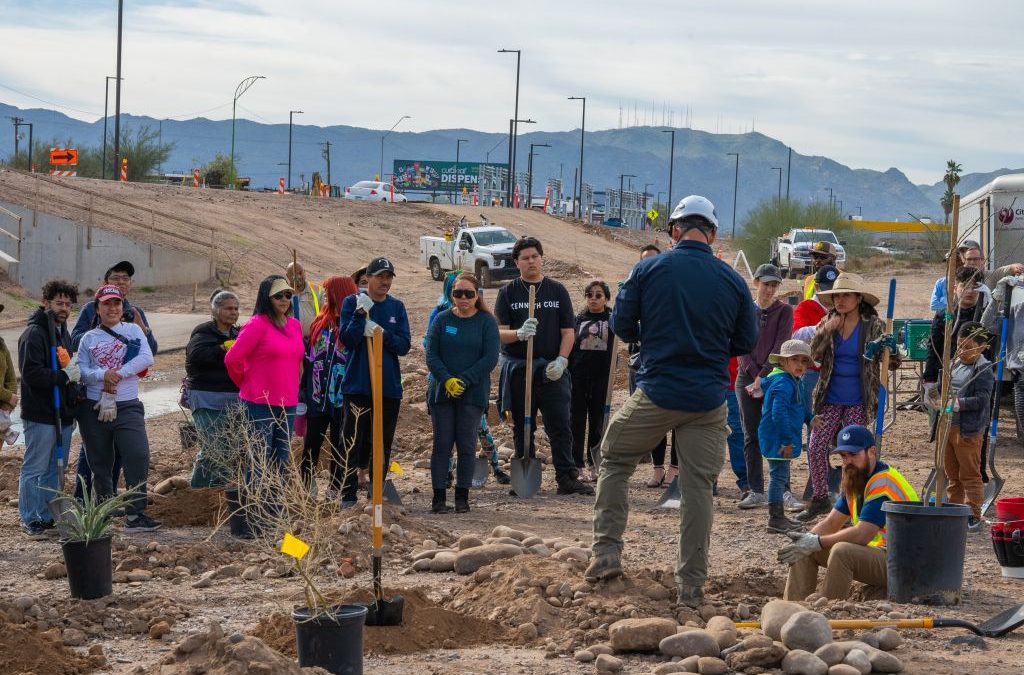
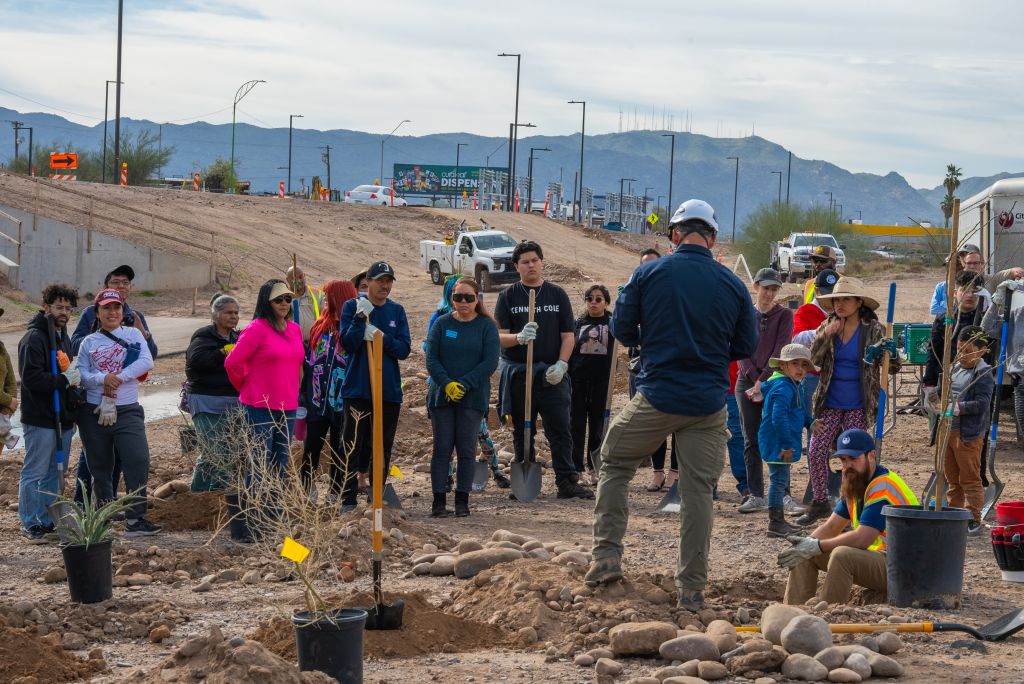
Community members restoring the Salt River in South Phoenix with Protectors of the Salt River.
When residents lead the restoration of their local waterways, the impact of these projects extends beyond the water’s edge. While this approach is important, it isn’t always easy to put into practice.
That’s why this year, the Urban Waters Learning Network (UWLN) is working with three communities to put community-led waterway restoration into action. In New Orleans, Southeast Raleigh, and South Phoenix, three community-based organizations have been selected to pilot watershed restoration and revitalization projects that are designed and led by local residents. Over the coming months, these pilots will address flooding and environmental degradation while also building local workforces, expanding career pathways, and supporting residents to shape the future of their communities.
Each site was selected for its strong local leadership, community priorities, and commitment to connecting restoration with workforce development and anti-displacement strategies. This work looks different based on the location. For some projects, this work looks like weeknight community meetings that double as job training sessions or early Saturday mornings spent removing invasive plants. For others, it means residents learning how to map and advocate towards long-term solutions for their flood-prone streets.
With UWLN’s support through funding, technical assistance, and shared learning, these pilot projects prove that watershed restoration that prioritizes people and place is not only possible—it’s necessary.
Green Pathways in Southeast Raleigh
Transforming watershed restoration into employment opportunities
In Southeast Raleigh, flash flooding and pollution in the Walnut Creek wetlands have affected community health and opportunity for decades. Partners for Environmental Justice, a grassroots organization formed in the 1990s, is addressing these harms through their Green Futures Workforce Development Pilot Program.
This pilot turns watershed restoration into paid pathways for employment. Participants gain hands-on experience in green infrastructure, habitat restoration, and environmental monitoring—all while connecting with employers, nonprofits, and training institutions. To reduce barriers to participation, the program offers stipends, childcare, and transportation support.
By investing directly in residents, this pilot project ensures that short-term water projects create long-term economic opportunities.
Community-Led Flooding Solutions in New Orleans
Building local agency in stormwater decision-making
Flooding is a longstanding challenge in New Orleans, especially in neighborhoods where resources have long been stretched thin. Poor drainage, aging infrastructure, and long-standing neglect continue to put entire neighborhoods at risk.
The Water Collaborative of Greater New Orleans addresses this through their Multi-Sector Partnerships Pilot Project. By working alongside community partners, the Collaborative supports the creation and implementation of neighborhood-scale green infrastructure solutions like rain gardens and bioswales.
Over six months, residents and partners will participate in paid workshops to identify priorities, explore restoration options, and map funding pathways. Participants also connect with planners, technicians, and funders to build partnerships with local stakeholders. This program equips residents with the tools they need to do more than just weigh in—it prepares them to lead the stormwater decisions that affect their streets.
Stewardship Along the Salt River in South Phoenix
Deepening community connections to land and water
In South Phoenix, the Salt River holds centuries of deep local, ecological, and community significance—yet local voices and traditional land-care practices have not always been centered in restoration efforts.
Protectors of the Salt River is changing that through its Community Stewardship and River Corridor Restoration Pilot Project. This initiative strengthens collaboration across residents, conservation partners, and educators by bringing people together to build strong local watershed restoration skills. Participants will learn Indigenous land care practices, participate in hands-on restoration opportunities, and shape a Local Stewardship Guide with their perspectives.
This project builds lasting benefits for ecological health, community connection, and supports intergenerational sharing of cultural and ecological knowledge. Moving forward, it ensures that the Salt River’s future is shaped by the people who know and value it most.
Looking Ahead
From December 2025 to May 2026, UWLN is providing each pilot project location with funding, technical support, and space for shared learning. Together, these projects show that caring for rivers and floodplains isn’t just about land and water—it’s also about jobs, community health, and long-term opportunities for the communities doing this work.
Curious about leading community-centered restoration where you live? We have resources to support you. Our Community-Centered Solutions for Green Gentrification and Displacement toolkit and accompanying online course help local leaders build greening projects that put the community first.
- Access our Toolkit for a comprehensive report that breaks down definitions, case studies, and strategies community groups can apply in greening projects.
- Access our Self-Paced Accompanying Online Course for additional support to walk through the Toolkit. The course can be easily integrated into a one-day or multi-day workshop where leaders from multiple sectors in a community can learn together and begin to chart a course for local, collective action.